
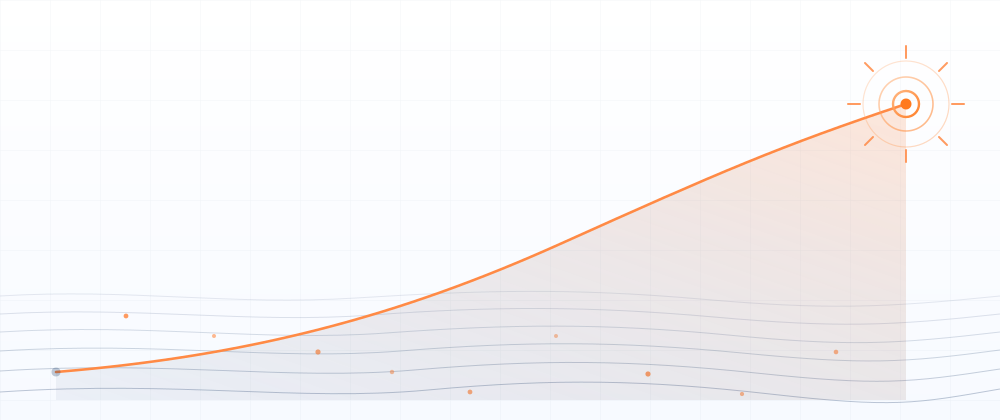
Personal practice is not a task list to be filled in; it is a life course in which cognition keeps accumulating, insight keeps breaking through and practice keeps climbing. Every book read, every road walked, every person met and every mistake made becomes a layer of sedimentary rock in cognition. They pile up in silence, waiting for one moment of clarity to set them alight. Awakening gives cognition its direction, guidance calibrates it, knowledge expands it and purposeful practice verifies it — while insight is its fusion. Insight after insight carries personal practice from the plain to the peak, from completion to transcendence, from ordinary to excellent.
1. Cognitive accumulation: the soil of every insight
Insight is not inspiration dropped from the sky; it is the eruption that follows accumulation reaching its critical point. Without awakening, cognition has no direction; without guidance, no boundary; without knowledge, no depth; without purposeful practice, no place to land.
Awakening is the first waking of cognition. It moved me from seeing a problem to being unable to pretend I had not seen it. I chose community digital support for older adults because of an older man who kept asking his phone the same question: “How do I scan this code? How do I watch the video my child sent me?” In that moment the digital divide stopped being an abstract concept and became the silence of a person shut out by the times. Awakening is not knowing what should be done; it is no longer being able to bear not doing it.
Guidance is the calibrator of cognition. It taught me that enthusiasm without direction drifts off course, and goodwill without method does harm. Value guidance taught me to respect older people; method guidance taught me to research before acting; ethical guidance taught me to protect privacy; safety guidance taught me to go in pairs. Guidance does not walk the road for you; it shows you which roads not to take.
Knowledge is the fuel store of cognition. The psychology of ageing, communication skills, questionnaire design, interview methods, fraud prevention, short-video production — none of this is luggage carried on the back; it is a tool grown into the hand. Knowledge is not there to make you look clever; it is there so that you do not panic in front of a real problem.
Purposeful practice is the testing ground of cognition. My plan: complete 80 questionnaires, interview 10 older adults in depth, run 3 digital-skills sessions, serve more than 30 older people one to one, produce 1 research report, put forward 2 practical recommendations and make 1 short video. Practice is not carrying knowledge out of the room; it is putting yourself into it.
2. The breakthrough: cognitive fusion and the dawn of the soul
Insight tends to arrive in the most ordinary moments.
That day I was crouching beside an older man who had tapped the wrong spot three times. I was about to reach over and do it for him when he pulled his hand back and said quietly: “I will do it myself.” In that moment everything I had learned — questionnaire design, communication technique, policy knowledge — was rearranged. I understood suddenly: what he wanted was not efficiency but dignity; what he needed was not to be relieved of the task but to be trusted. What I was bringing was not a set of phone instructions but the possibility of being seen and being connected.
This is the kind of insight that strikes like a flood. It is not that you have thought it through, but that you have acted it through; it is not learning something new, but old cognition suddenly connecting. Insight has four marks:
- Suddenness: it arrives unbidden and cannot be scheduled.
- Penetration: it strikes at the essence and passes beyond the surface.
- Reframing: it reorders values and reorganises cognitive structure.
- Action: it changes behaviour immediately and lifts practice to the next level.
Insight also has four levels:
- Method insight: so it can be done this way.
- Cognitive insight: so the problem was not what I assumed.
- Value insight: so this is what I truly care about.
- Mission insight: so this is what I can do for the world.
3. How insight drives practice to the summit: from doing to understanding, and back to doing
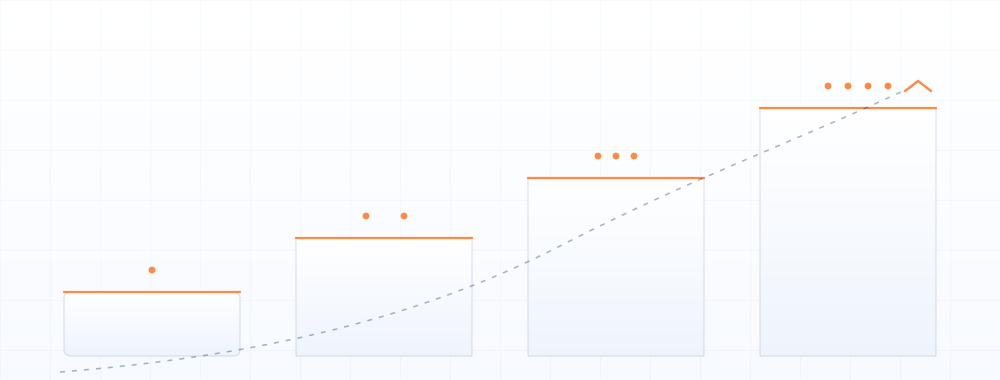
Every insight lifts the practice that follows it.
First insight — from “I want to serve” to “I want to understand”. I stopped rushing to teach procedures and started by listening. The goal of the practice rose from delivering a training session to building trust.
Second insight — from one-way help to two-way healing. An older man said: “Since you started coming, this courtyard feels alive again.” I realised that supporting older people is not me bringing them light; it is them showing me what real connection is. The goal rose from serving 30 people to recording 30 life stories.
Third insight — from personal practice to social connection. Behind the digital divide lie generational rupture, community isolation and lost dignity. Personal practice can become a bridge. The goal rose from writing a report to proposing a community support model others can copy.
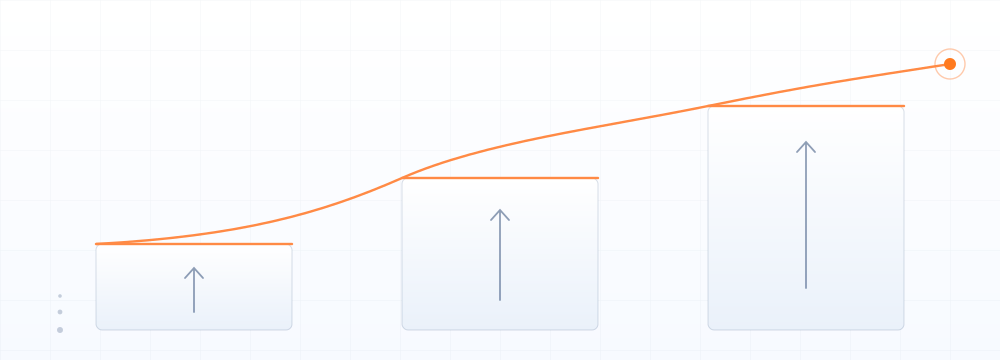
A summit is not one insight; it is the accumulation of many. People who succeed are not people without confusion; they are people who keep accumulating while confused, who break through at the decisive moment and who act immediately after the breakthrough. Real success is not standing on someone else's shoulders, but making your own cognition and action a step others can use. Being outstanding is not standing above everyone; it is being able to break through, to take responsibility and to give light at the decisive moment.
4. A personal practice plan built around insight
(1) Theme and goals
Theme: community digital-support service for older adults.
Goals:
- Complete 80 questionnaires to map the digital life of older residents.
- Interview 10 older adults in depth and record their real difficulties and needs.
- Run 3 digital-skills sessions: video calls, booking appointments, fraud prevention.
- Serve more than 30 older people with one-to-one phone coaching.
- Produce 1 research report and put forward 2 practical recommendations.
- Make 1 short video or article to spread the idea of digital support for older adults.
(2) Stages: accumulation — trigger — distillation — elevation
| Stage | Timing | Main tasks | Cognitive accumulation and insight | Expected outputs |
|---|---|---|---|---|
| Accumulation | Week 1 | Choose the topic, contact the community, design the questionnaire, study the background | Awakening, guidance, knowledge | Practice plan, draft questionnaire |
| Trigger | Weeks 2-3 | Visits, interviews, training, one-to-one coaching | Record the “insight moments” in real settings | Questionnaire data, interview notes, service log |
| Distillation | Week 4 | Analyse data, archive material, write the report | Turn insight into a cognitive framework | Draft research report, video material |
| Elevation | Week 5 | Revise the report, present it, reflect and summarise | Form a new awakening; plan the next practice | Practice report, slides, reflections |
(3) What it involves
Desk research read up on the psychology of ageing, the digital divide and community governance; design the questionnaire and interview outline.
Field practice go into the community to observe, interview, support and train, and record both the process and the insight moments each day.
Data work count questionnaires, transcribe interviews, classify photos and video, and distil the core problems.
Outputs practice report, research paper, article, video, slides, proof of practice.
Reflection summarise the upgrade in cognition and turn it into the starting point of the next practice.
5. Support and safety
Budget travel, printing, materials, insurance.
Safety plan always go in pairs, tell family where you are going, keep an emergency contact.
Ethics respect, confidentiality, consent, no intrusion.
Health reasonable hours, protection from heat and infection, attention to food and drink.
6. Expected outputs
- Practice plan, practice log, research report
- Questionnaire data, interview notes, photos and video
- Digital-skills teaching material, fraud-prevention leaflet
- Proof of practice, community feedback, personal reflections
- Slide presentation and published article
7. Closing: insight after insight, toward excellence
Everything that accumulates is cognition. Awakening is cognition waking, guidance is cognition being calibrated, knowledge is cognition expanding, purposeful practice is cognition being verified. And insight is cognition fusing. It makes sleeping cognition connect suddenly, scattered practice focus suddenly, and ordinary action suddenly carry a mission.
Insight after insight carries personal practice from the lower order to the higher, from completion to transcendence, from the ordinary to the summit. Becoming successful is not about how much you own, but about cognition that keeps breaking through and practice that keeps climbing. Being outstanding is not standing above everyone; it is being able to break through, to take responsibility and to give light at the decisive moment.
With awakening as the lamp, guidance as the helm, knowledge as the sail, practice as the road and insight as the fire, knowing and doing become one — and the summit is reached.
Put this method to work in your own practice.